

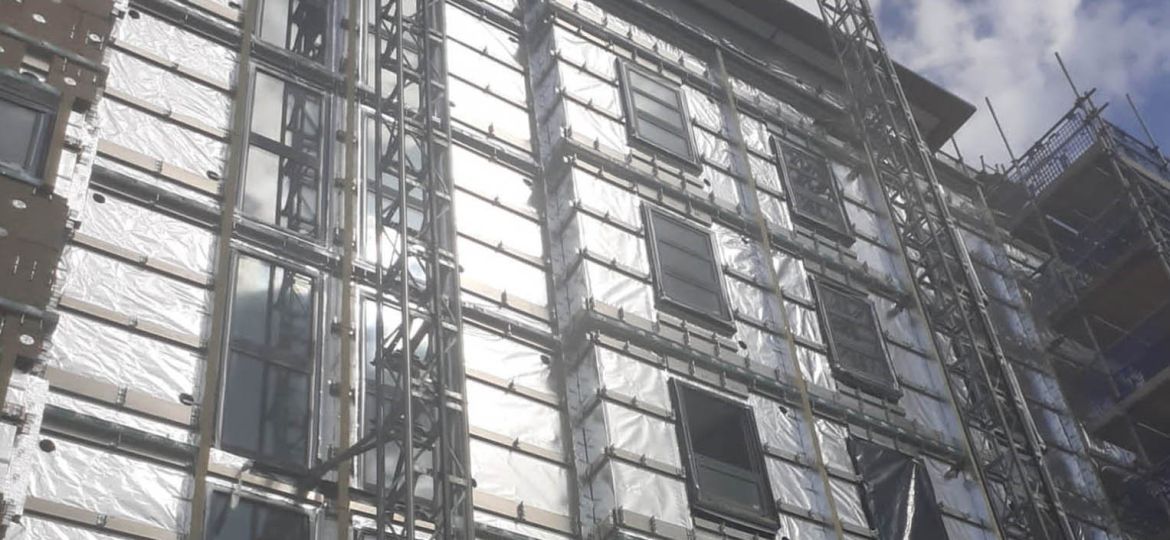
In modern construction, vapour permeable membranes (VPMs) play a crucial role in protecting buildings from moisture while supporting energy efficiency and long-term structural performance. However, as building regulations continue to evolve – particularly in relation to fire safety – it is increasingly important to understand how vapour permeable membranes perform in fire scenarios and how to ensure compliance without compromising performance.
At Thermic Technology, we recognise that performance is no longer measured by thermal efficiency alone. Today’s construction products must meet rigorous standards for fire safety as well as durability, moisture management, and compliance. In this article, we explore what vapour permeable membranes are, how they function, and the key considerations when it comes to fire performance.
What Is a Vapour Permeable Membrane?
A vapour permeable membrane, sometimes referred to as a breather membrane, is typically installed on the external side of insulation within wall or roof constructions. Its primary function is to allow water vapour to escape from inside the building while preventing the ingress of wind-driven rain and external moisture.
This dual functionality is essential in preventing condensation build-up within the building fabric. Trapped moisture can lead to reduced thermal performance, mould growth, timber decay, and long-term structural damage. By allowing vapour to diffuse outward while maintaining weather resistance, vapour permeable membranes contribute to a healthier and more durable building envelope.
They are widely used in timber frame systems, steel frame systems, and masonry constructions where moisture control and airtightness are critical design considerations.
The Growing Importance of Fire Safety in the Building Envelope
In recent years, fire safety has become a central focus within the construction industry, particularly in relation to external wall systems. Regulatory changes and increased scrutiny have placed emphasis on ensuring that all components within the building envelope – including membranes – meet appropriate fire performance standards.
Although vapour permeable membranes are typically concealed within the wall build-up, they can contribute to fire spread if not correctly specified. In ventilated façade systems especially, membranes may be positioned behind cladding where cavity barriers and fire stopping measures are also present. If the membrane is combustible and not properly tested, it could play a role in flame propagation within the cavity.
As a result, specifiers, contractors, and developers must consider the reaction to fire classification of membranes and ensure that the selected product aligns with the fire strategy for the building.
Understanding Reaction to Fire Classifications
Fire performance in construction materials is commonly measured using European classification standards, such as EN 13501-1. Products are tested and given a classification that reflects how they react when exposed to fire.
Membranes may fall into a range of classifications depending on their composition. While some traditional polymer-based membranes can achieve limited fire resistance, enhanced or specialist products are designed to achieve improved reaction to fire ratings.
It is important to note that reaction to fire is different from fire resistance. Reaction to fire assesses how a product contributes to fire development, whereas fire resistance measures how long a building element can withstand fire while maintaining structural integrity and compartmentation.
When selecting vapour permeable membranes, it is essential to review certification, test data and declared performance to ensure suitability for the intended application.
Balancing Breathability and Fire Performance
One of the key challenges in membrane design is balancing vapour permeability with fire safety. High vapour permeability requires a micro-porous or monolithic structure that allows moisture vapour to pass through while remaining watertight. However, increasing fire performance often involves incorporating materials that resist ignition and flame spread.
Advancements in material technology have enabled the development of membranes that maintain excellent breathability while offering improved fire classifications. This ensures that moisture management is not sacrificed to achieve compliance.
For designers and contractors, the goal is to select a product that supports the full performance requirements of the wall or roof system – thermal efficiency, airtightness, moisture control, and fire safety – as part of a holistic building envelope solution.
The Role of Vapour Permeable Membranes in Façade Systems
In rainscreen cladding systems, vapour permeable membranes are commonly installed over sheathing boards and insulation, behind the ventilated cavity. In this configuration, they provide secondary weather protection and contribute to airtightness.
However, this position within a ventilated cavity means membranes can be exposed to airflow in a fire scenario. Without appropriate fire-rated cavity barriers and compliant membrane products, there is potential for vertical fire spread.
Therefore, correct specification and installation are essential. The membrane must be compatible with the wider façade system and used in conjunction with cavity barriers and fire stopping solutions that meet regulatory requirements.
Regulatory Considerations and Compliance
Building regulations and guidance documents continue to evolve, particularly for higher-risk residential buildings. Compliance requires a clear understanding of the fire performance of all materials used in the external wall construction.
Specifiers should:
- Review reaction to fire classifications and supporting test evidence.
- Ensure compatibility with the building’s fire strategy.
- Confirm compliance with current Building Regulations and relevant guidance.
- Consider project-specific risk assessments.
Working with reputable suppliers who provide transparent technical documentation is critical in supporting due diligence and regulatory compliance.
Installation and Best Practice
Even the highest-performing membrane will only deliver its intended performance if installed correctly. Gaps, incorrect overlaps, or poor detailing around openings can compromise both moisture protection and fire strategy.
Best practice includes:
- Following manufacturer installation guidelines.
- Ensuring correct overlaps and sealing.
- Integrating membranes with cavity barriers and fire stopping systems.
- Avoiding damage during installation.
- Conducting on-site inspections where appropriate.
Attention to detail is particularly important in façade systems, where concealed elements may be difficult to access once cladding is installed.
Supporting a Holistic Approach to Building Performance
Fire safety should never be considered in isolation. Vapour permeable membranes form part of a wider system that includes insulation, sheathing boards, cladding, fixings, and cavity barriers. Each component must work together to achieve overall compliance and performance.
A holistic approach to specification considers:
- Moisture control and condensation risk analysis.
- Thermal bridging and energy efficiency targets.
- Airtightness requirements.
- Structural considerations.
- Fire performance and compartmentation.
By addressing these factors collectively, construction professionals can deliver buildings that are safe, durable and energy efficient.
The Importance of Technical Support and Documentation
Given the complexity of modern regulations, access to clear technical data is essential. Product data sheets, fire classification reports, and installation guidance provide the evidence needed for compliance and building control approval.
Early engagement with suppliers can help ensure that the chosen membrane aligns with project requirements. Technical teams can support with specification advice, detailing guidance, and performance clarification, reducing the risk of non-compliance later in the build process.
Prioritising Performance Without Compromise
Vapour permeable membranes remain a vital component of contemporary building envelope design. They protect against moisture ingress, allow buildings to breathe and contribute to long-term durability. However, in today’s regulatory landscape, fire safety must be given equal consideration.
By selecting appropriately tested products, reviewing fire classifications carefully and ensuring correct installation, specifiers and contractors can achieve the right balance between breathability and fire performance.
At Thermic Technology, we understand the importance of reliable, high-performance building envelope solutions. As fire safety standards continue to evolve, the industry must remain proactive – ensuring that every component, including vapour permeable membranes, contributes to a safer and more resilient built environment.